

FAQ
Frequently Asked Questions
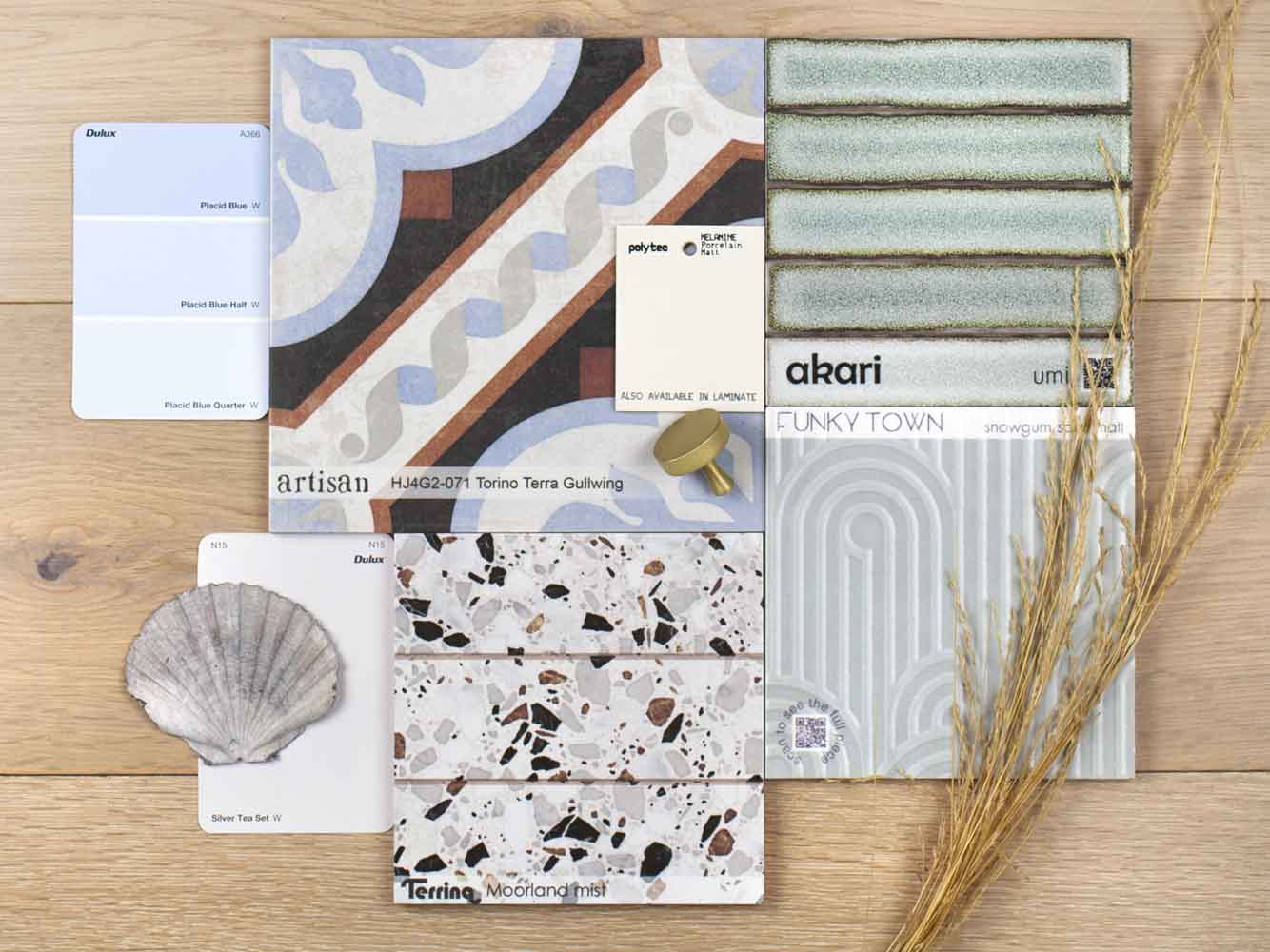
To order a sample:
- Click on the 'Get Sample' button
- Head to your Shopping Cart
- Fill out your details
- Finalise payment
We will pop a beautifully labelled sample tile (or up to four different colours, if you like) in the mail to you before you know it!
All of our samples are specially made - and come in a decent sized piece, beautifully boxed – so why not order a few – it’s only $20 to cover handling and shipping.
How many samples can I get in one order?
You can get up to four tile samples in one order. Most of our samples are generous size, the 200 x 200 mm tiles come as a full tile.
How long will my sample order take to arrive?
Your tile order should arrive between 4 - 6 days. Please contact us if you haven't received your order within one week.
Can I get my sample order delivered to a PO Box address?
Yes - we deliver sample orders to PO Boxes and Parcel Lockers, as well as home and work addresses.
Where else can I get my Southern Cross Ceramics tile samples?
We have our showroom and factory in Mulgrave, Melbourne, come and visit us if you are close by. Otherwise visit your local tile store, the customer service team will help you out with your sample order.
How do I order Southern Cross Ceramics tiles?
You can place an order for Southern Cross Ceramics tiles at your local tile store.
We sell our tiles through major tiles stores throughout Australia.
If you are in Melbourne, visit us at our Mulgrave Showroom
Where can I view Southern Cross Ceramics tiles?
We have our Southern Cross Ceramics tiles displayed at all major tiles stores throughout Australia.
If you are in Melbourne, visit us at our Mulgrave Showroom or contct us for assistance.
Why is ordering the correct quantity so important?
We are a ‘Make to Order’ business. This means your order is made specifically for you. Once you place your order, after 24 hours (and payment terms are met), your order will be sent to production in an assigned manufacturing run and will be shipped with a batch number. A batch is a group of tiles produced under identical conditions, using the same raw materials, digital decoration file, glazes, and kiln cycle.
Planning is key! Be sure to order enough tiles for your whole project. If you come back later to order more of the "same" tile, it will be made in a different batch, and while it’ll be close, it might not match perfectly. That’s because each batch can have slight differences in shade and tone — it’s part of the charm (and nature) of ceramic production.
Don’t worry — all batch variations are within the approved standards of AS 13006:2020, covering colour tone (tonality), size (calibre), and surface finish. We make sure it's consistent where it counts, but every batch still has its own personality!
How long will my order take?
Most of our tiles are made to order, which means we begin the process of making your tiles once the order has been placed.
In general, it's up to two weeks production turnaround and another one week for delivery, depending on your location.
Please check current lead times with your tile provider or enquire at our Mulgrave Showroom
Can I cancel my order?
You can cancel your order within 24 hours, after which we go to production. Please contact our Mulgrave Showroom if there is a problem with your order placement.
Can I make changes to my order?
You can make changes to your order within 24 hours, after which we go to production. Please contact our Mulgrave Showroom if there is a problem with your order placement.
What is Variation?
Variation in tiles is usually indicated by abbreviation (V1), (V2), (V3), (V4) and refers to the amount of variance that occurs from tile to tile. For example a natural stone would have a lot of variation whereas a single colour glazed tile would have minimum variation.
What is the difference between rectified and rounded edge?
Rectified edge on a tile refers to a tile which has been precision cut to size and the edges are square. This is often desirable as the grout lines can be narrower and the grout can be level with the tile.
Rounded and pillow edge tiles are often more economical and sometimes the difference is hard to notice.
What is the difference between porcelain and ceramic tile?
The main difference between porcelain and ceramic tiles is their composition, manufacturing process, and overall durability:
- Porcelain Tiles are made from a more refined, denser clay and are fired at a higher temperature than ceramic tiles. It typically contains sand, feldspar, and other minerals.
- Porcelain tiles are more durable, water-resistant, and expensive, making them suitable for high-traffic areas or wet environments.
- Ceramic tiles are more affordable, easier to install, but generally less durable and better suited as wall tiles.
Do I need to seal the tiles?
Porcelain tiles as well as glazed ceramic tiles have low water absorption, which means they don't require sealing.
The grout between the tiles is often porous and can absorb stains or moisture. It's a good idea to seal the grout lines to prevent staining and mold growth.